Begin of page section:
Page sections:

  • Go to contents (Accesskey 1)
  • Go to position marker (Accesskey 2)
  • Go to main navigation (Accesskey 3)
  • Go to sub navigation (Accesskey 4)
  • Go to additional information (Accesskey 5)
  • Go to page settings (user/language) (Accesskey 8)
  • Go to search (Accesskey 9)

End of this page section. Go to overview of page sections

Begin of page section:
Page settings:

English en
Deutsch de
Search
Login

End of this page section. Go to overview of page sections

Begin of page section:
Search:

Search for details about Uni Graz
Close

End of this page section. Go to overview of page sections


Search

Begin of page section:
Main navigation:

Page navigation:

  • University

    University
    • About the University
    • Organisation
    • Faculties
    • Library
    • Working at University of Graz
    • Campus
    Developing solutions for the world of tomorrow - that is our mission. Our students and our researchers take on the great challenges of society and carry the knowledge out.
  • Research Profile

    Research Profile
    • Our Expertise
    • Research Questions
    • Research Portal
    • Promoting Research
    • Research Transfer
    • Ethics in Research
    Scientific excellence and the courage to break new ground. Research at the University of Graz creates the foundations for making the future worth living.
  • Studies

    Studies
    • Prospective Students
    • Students
    • Welcome Weeks for First Year Students
  • Community

    Community
    • International
    • Location
    • Research and Business
    • Alumni
    The University of Graz is a hub for international research and brings together scientists and business experts. Moreover, it fosters the exchange and cooperation in study and teaching.
  • Spotlight
Topics
  • Sustainable University
  • Researchers answer
  • Work for us
Close menu

End of this page section. Go to overview of page sections

Begin of page section:
You are here:

University of Graz Climate Change news The state has a duty to protect the property, health and life of its citizens, says lawyer Miriam Hofer.
  • About us
  • Research fields
  • Study/Doctorate
  • Network
  • Open Calls

End of this page section. Go to overview of page sections

Friday, 10 February 2023

The state has a duty to protect the property, health and life of its citizens, says lawyer Miriam Hofer.

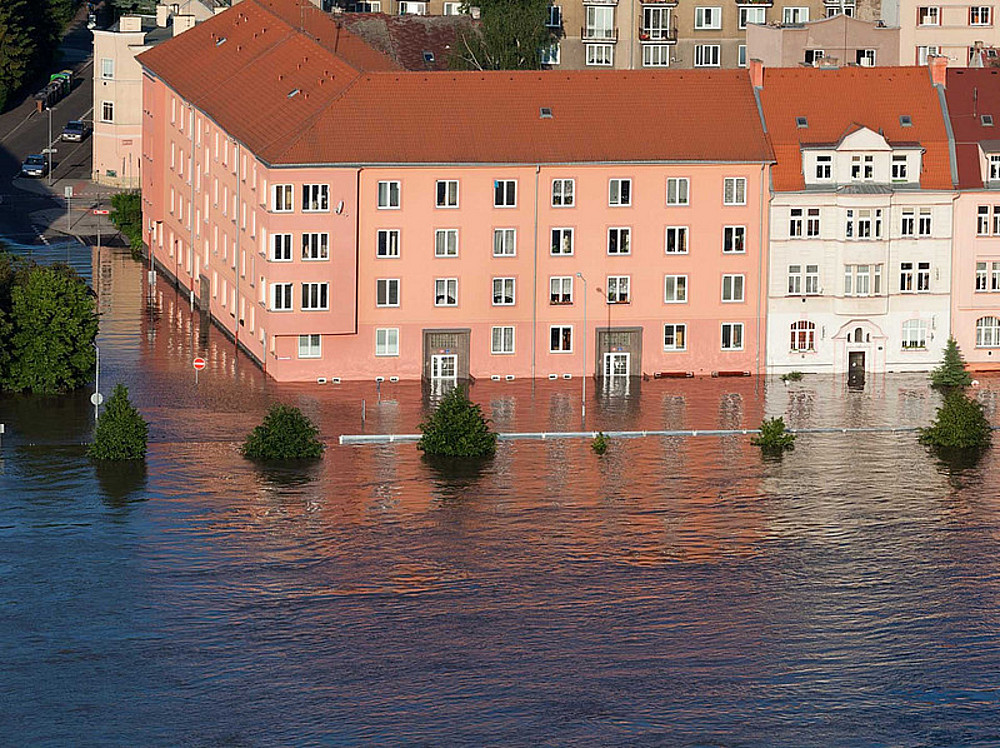
Heavy rainfall leads to flooding. Water enters cellars, mudslides destroy houses. Climate change has its share in this. Does the state have a duty to protect the population that can be derived from fundamental rights? And can it be required to act on the basis of these rights in order to prevent damage to people resulting from such events? Lawyer Miriam Hofer explores this exciting approach.

"Climate change also affects our fundamental rights: especially through extreme weather events, our living spaces, our belongings and, in the worst case, we ourselves are endangered," the scientist from the research center for climate protection law "ClimLaw: Graz" elaborates. "Therefore, the state is constitutionally responsible, for example, from its duties to protect property or health and life, to take climate protection measures." But these are not in good shape in this country. In an index recently presented at the UN Climate Change Conference, Austria ranked only 32nd out of 59 countries. Miriam Hofer sees a particular need for improvement in the Climate Protection Act, because the targets contained therein had already expired in 2020. Since 2021, there have not even been any targets within Austria for how many emissions are to be saved per year in the area of transport, for example. And she adds, "There is also a need to catch up in other areas: whether an industrial plant or a power plant that produces a lot of greenhouse gases must use particularly 'climate-friendly' technologies or may not be built at all, for example, is not regulated by law."

Necessary expansion of renewable energies
So there are a number of construction sites in climate protection law. "For us to achieve the energy turnaround, the legal framework must also fit. Renewable energies should be able to be expanded quickly, and for this the approval procedures must be accelerated. To this end, the EU issued an 'emergency regulation' at the turn of the year. How this is to be implemented in practice in Austria raises numerous questions, which I am currently dealing with in order to identify solutions," says the lawyer about her current work. In the case of wind energy, for example, the current generation capacities must be doubled. But nature conservation must not fall by the wayside: "Because the loss of biodiversity also endangers our natural livelihoods and intensifies the negative consequences of climate change."
However, energy turnaround projects often fail due to landscape or townscape protection. For example, when the owner of an old building is not allowed to erect a photovoltaic system on the roof because it would disrupt the external appearance of the village. "A change in thinking must take place here. One of the remedies is an amendment to the Environmental Impact Assessment Act. It provides that energy transition projects may no longer be prohibited under certain circumstances solely because they would impair the landscape."

Miriam Hofer's work at the Climate Change Law Research Center is embedded in the Climate Change Graz profile area at the University of Graz.

created by Gudrun Pichler

Related news

ACRP - 18. Call: Jetzt klimarelevante Forschung für Österreich einreichen

Das Austrian Climate Research Programme (ACRP) fördert orientierte Grundlagenforschung zu Klimawandel, Anpassung, Minderung und Transformation. Reichen Sie bis 15.04.2026 Ihre Projektidee ein.

2. Österreichischer Hitzeaktionstag (“Austrian Heat Action Day”)

On 9 June 2026, the 2nd Austrian Heat Action Day will take place. The aim of the Heat Action Day is to further strengthen heat protection measures and to sustainably raise awareness of the impacts of climate change on human health.

Reiz-Thema

Die Erde heizt sich auf. Gleichzeitig aber wächst die Zahl derer, die nichts mehr davon hören wollen. Was könnte sie umstimmen? Hermine Mitter untersucht Anreize zu klimafreundlichem Verhalten.

Human Rights, Security and National Adaptation Plans Nexus

A Holistic Approach to Women and Human Mobility on Monday, June 28th 16:00-17:30 online

Begin of page section:
Additional information:

University of Graz
Universitaetsplatz 3
8010 Graz
Austria
  • Contact
  • Web Editors
  • Moodle
  • UNIGRAZonline
  • Imprint
  • Data Protection Declaration
  • Accessibility Declaration
Weatherstation
Uni Graz

End of this page section. Go to overview of page sections

End of this page section. Go to overview of page sections

Begin of page section:

End of this page section. Go to overview of page sections