Begin of page section:
Page sections:

  • Go to contents (Accesskey 1)
  • Go to position marker (Accesskey 2)
  • Go to main navigation (Accesskey 3)
  • Go to sub navigation (Accesskey 4)
  • Go to additional information (Accesskey 5)
  • Go to page settings (user/language) (Accesskey 8)
  • Go to search (Accesskey 9)

End of this page section. Go to overview of page sections

Begin of page section:
Page settings:

English en
Deutsch de
Search
Login

End of this page section. Go to overview of page sections

Begin of page section:
Search:

Search for details about Uni Graz
Close

End of this page section. Go to overview of page sections


Search

Begin of page section:
Main navigation:

Page navigation:

  • University

    University
    • About the University
    • Organisation
    • Faculties
    • Library
    • Working at University of Graz
    • Campus
    Developing solutions for the world of tomorrow - that is our mission. Our students and our researchers take on the great challenges of society and carry the knowledge out.
  • Research Profile

    Research Profile
    • Our Expertise
    • Research Questions
    • Research Portal
    • Promoting Research
    • Research Transfer
    • Ethics in Research
    Scientific excellence and the courage to break new ground. Research at the University of Graz creates the foundations for making the future worth living.
  • Studies

    Studies
    • Prospective Students
    • Students
  • Community

    Community
    • International
    • Location
    • Research and Business
    • Alumni
    The University of Graz is a hub for international research and brings together scientists and business experts. Moreover, it fosters the exchange and cooperation in study and teaching.
  • Spotlight
Topics
  • Our digital Advent calendar
  • Sustainable University
  • Researchers answer
  • Work for us
Close menu

End of this page section. Go to overview of page sections

Begin of page section:
You are here:

University of Graz Climate Change news Folgen des Klimawandels für Österreichs Wasser: Uni Graz Projektpartner in neuer Studie
  • About us
  • Research fields
  • Study/Doctorate
  • Network
  • Open Calls

End of this page section. Go to overview of page sections

Thursday, 13 November 2025

Consequences of climate change for Austria's water: Uni Graz is partner in new study

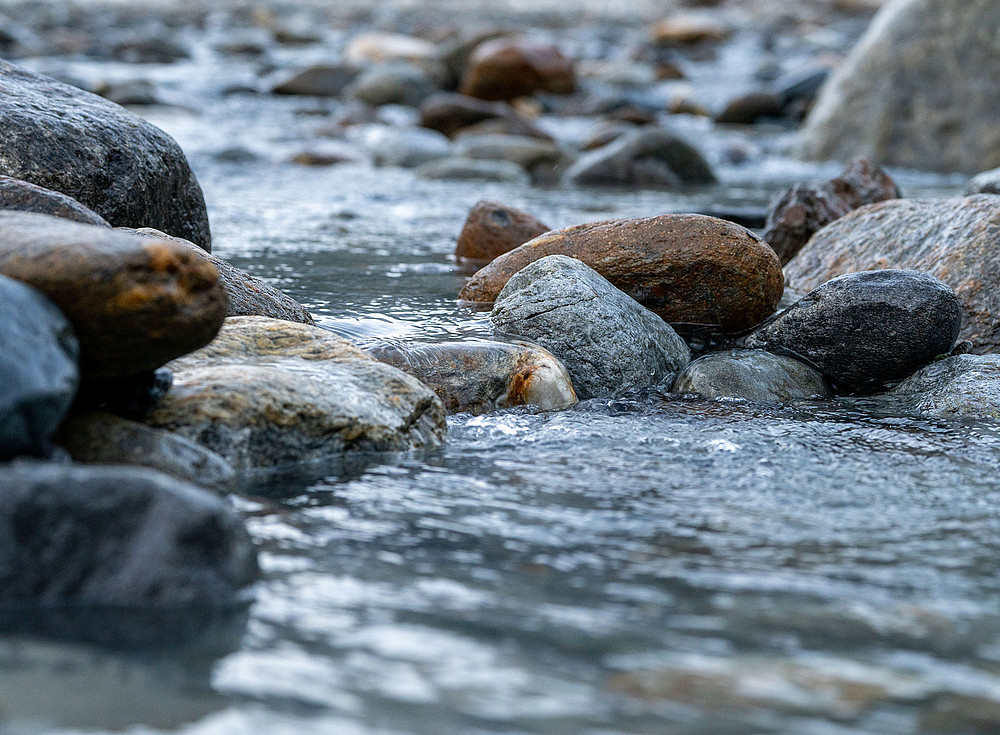
running water in a stream bed with large, rounded stones ©Stefan Schauhuber

From glacier melt to droughts, climate change is having a wide range of effects on Austria's water resources. A new study aims to lay the groundwork for developing measures to protect the population and the environment. Photo: Stefan Schauhuber

It remains to be seen what goals the international community will agree on at the current UN Climate Change Conference in Brazil. One thing is certain: global warming continues to increase. A large-scale study commissioned by the Federal Ministry of Agriculture and Forestry, Climate and Environmental Protection, Regions and Water Management (BMLUK) launched today is investigating what this means for our water. One of the project partners is the University of Graz. Wolfgang Schöner and his team from the Department of Geography and Regional Science are contributing the latest findings on the influence of ice and snow on the water balance.


Rapidly melting glaciers, thawing permafrost, less snow cover, but also more frequent, intense heavy rainfall and longer dry periods – climate change has many faces. The impact of all these changes on Austria's water resources is being investigated in the largest study on the subject to date, commissioned by the BMLUK and led by researchers from TU Wien and GeoSphere Austria, with the participation of the University of Graz, BOKU University, the engineering firm DI Holler and the federal states.

Ice and snow – the so-called cryosphere – play an important role in the water cycle. A team of scientists at the University of Graz, led by Wolfgang Schöner, summarise the current state of research on this topic in the study. “When the glaciers shrink, the runoff into the rivers is reduced and is particularly lacking in times of drought. The snow cover also fulfils an important function. When it melts in spring, it supplies the rivers and replenishes the groundwater. Without sufficient snow, the soil dries out more quickly,” explains Schöner. The thawing of the permafrost poses another danger: “This releases large amounts of debris, which in turn favours the formation of mudflows and increases the sediment transport of the rivers, thus increasing the risk of damage in the event of flooding,” says the researcher.

The results of the project are expected to provide water scenarios up to the year 2100, which will serve as a basis for developing measures to protect the population and the environment and to secure Austria's water resources.

More information on the study „Wasser im Klimawandel“ (German only)

Wolfgang Schöner is head of the research group “Climate Change in Mountain Regions” at the Department of Geography and Regional Science at the University of Graz and part of the profile area “Climate Change Graz”.
 

Those interested in the relationships between society and the environment and how they change in space and time, can study Geography at the University of Graz.

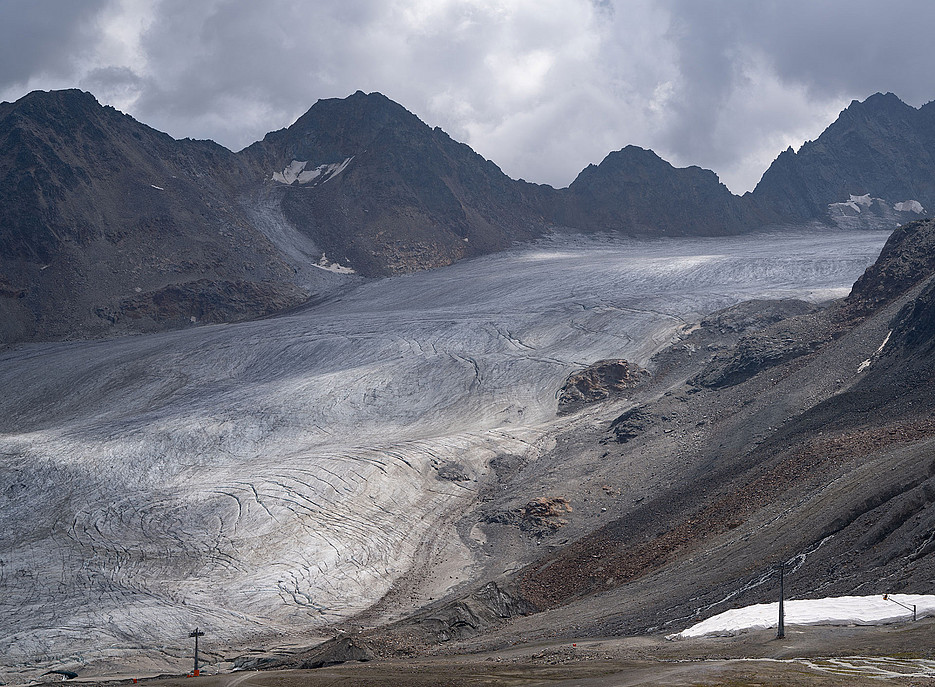
Glacier tongue surrounded by snow-free rocks and scree, lift poles in the foreground ©Stefan Schauhuber
©Stefan Schauhuber
Smaller glaciers means less runoff into streams. This can become a problem, especially during periods of drought. Photo: Stefan Schauhuber
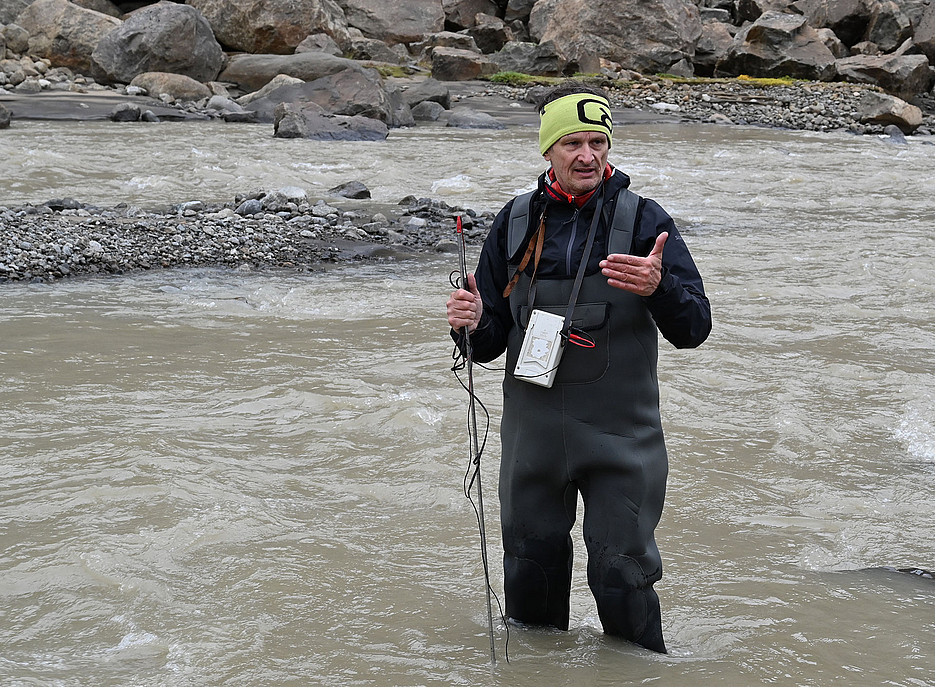
Wolfgang Schöner stands in waders in the drainage channel of a glacier in Greenland, holding a measuring rod in his hand, the device for it hanging around his neck, looking into the camera and speaking. ©University of Graz / Vilgut
©University of Graz / Vilgut
Wolfgang Schöner also studies changes in the ice in Greenland, based at the Sermilik Research Station of the University of Graz. Photo: University of Graz / Vilgut
created by Gudrun Pichler

Related news

Reiz-Thema

Die Erde heizt sich auf. Gleichzeitig aber wächst die Zahl derer, die nichts mehr davon hören wollen. Was könnte sie umstimmen? Hermine Mitter untersucht Anreize zu klimafreundlichem Verhalten.

Human Rights, Security and National Adaptation Plans Nexus

A Holistic Approach to Women and Human Mobility on Monday, June 28th 16:00-17:30 online

Circular Bioengineering: FWF Cluster of Excellence aims to revolutionise the product cycle

Take a renewable raw material from nature – wood, for example – break it down into its building blocks and use them to create a functional material, such as a water-repellent surface coating, with the help of green chemistry. Once this has served its purpose, break it down again into its chemical components and use them to build something new. This idea is set to revolutionise the production and life cycle of materials and goods. The Cluster of Excellence "Circular Bioengineering", funded by the Austrian Science Fund FWF, is researching how to produce products from biomass, develop sustainable methods for the production process, and open options for returning products that have reached the end of their lifetime back into a cycle. The University of Graz is a partner in this Cluster of Excellence, for which the FWF is providing 18 million euros. Including its own funds, the total volume of the project is 27 million euros. The lead is with the BOKU University in Vienna.

Climate change update: ClimateTracer of the University of Graz provides reliable data

Yesterday, the Copernicus Climate Change Service of the European Union published its data on global warming up to end of November 2024. These confirm that this year will see the 1.5 °C threshold clearly exceeded for the first time. The Wegener Center at the University of Graz already computed an accurate full-year prediction: the global near-surface air temperature in 2024 will rise by 1.62 °C – plus/minus 0.05 °C standard deviation – compared to the pre-industrial level. Such latest predictions for 2024 and other essential data on climate change are provided by the scientists via the Graz Climate Change Indicators (GCCI) portal.

Begin of page section:
Additional information:

University of Graz
Universitaetsplatz 3
8010 Graz
Austria
  • Contact
  • Web Editors
  • Moodle
  • UNIGRAZonline
  • Imprint
  • Data Protection Declaration
  • Accessibility Declaration
Weatherstation
Uni Graz

End of this page section. Go to overview of page sections

End of this page section. Go to overview of page sections

Begin of page section:

End of this page section. Go to overview of page sections